LIFE AS MYTH

JOURNAL
JOURNAL 2025

The Atlas
Our future world
JOURNAL 2025
LIFEWORKS
ATLAS

AUTUMN 2025
SQUARE WORD CALLIGRAPHY
The rebuilding of the cathedral after the fire coincided with my own life rebuilding. It was very powerful to walk in that sacred space as it slowly came back to life, coinciding with the birth of what my own life as a counselor and writer might be.
Picture Eight: Both ox and self transcended. Ten Oxherding Pictures. Attributed to Shubun (n.d.) Japan, Muromachi period.
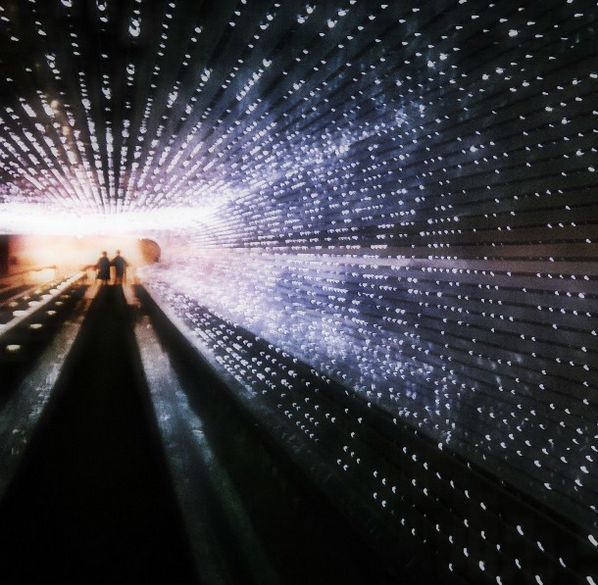
National Gallery of Art, Washington DC. Usher. 2016.
The cathedral renovation ended with a rededication ceremony in November 2008, coinciding again with my own life as I began work as a counselor in a small outpatient mental health clinic.
The cathedral’s greatness lies in its commitment to the belief that faith expressed through engagement with the world is the only way faith is truly expressed.
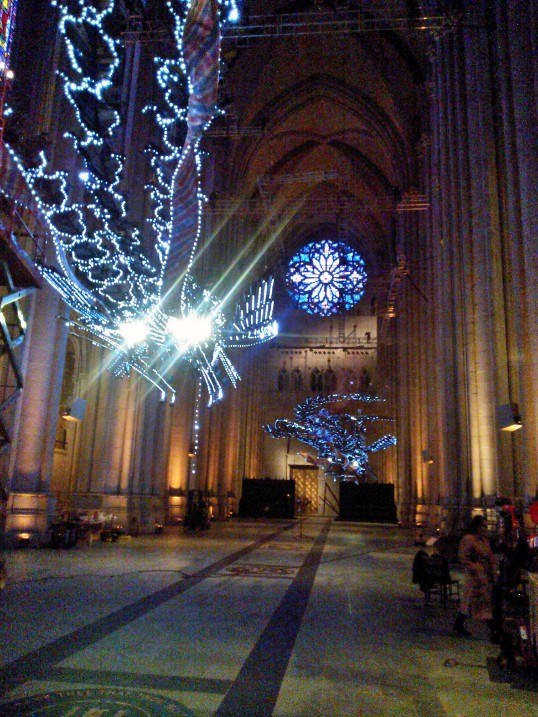
The Very Reverend Dr. James A. Kowalski, dean, November 2008 rededication ceremonyThere is another way I connected to this space. After the cathedral recovered they sponsored an installation of the work of Xu Bing, a Chinese artist. His visionary sculpture is Phoenix, the mythological Chinese creature that transcends death. According to the artist, these two phoenix represent the struggle toward new values and insights about how to live in the modern world. The sculpture is made of found materials from a migrant workers camp in Beijing.
Phoenix is best understood within the theme of metamorphosis, which preoccupied Xu after moving to New York in 1990. In 1997, he invented a new writing system by fusing elements of the English and Chinese languages. Although his words look like Chinese characters, they are comprised of English letters. His audience was invited to learn this “unified” language in an environment resembling a traditional calligraphy classroom, complete with manuals, writing tools and desks. The whole project was entitled New English Square Word Calligraphy.
"Wood, Light and Steel from Ash: Xu Bing’s Phoenixes", Aileen June Wang, artcritical: an online magazine of art and ideas (June 30, 2014).I returned to this exhibition many times just before I moved back to Georgia that same spring. Here the life of the cathedral and mine intersect another time. Bookends, of sorts, for the cathedral and for my own life.
(adapted from a daily journal June 2018 - 2019)
Phoenix, Xu Bing. Installation at The Cathedral of St. John the Divine, New York, NY. Usher. 2014.
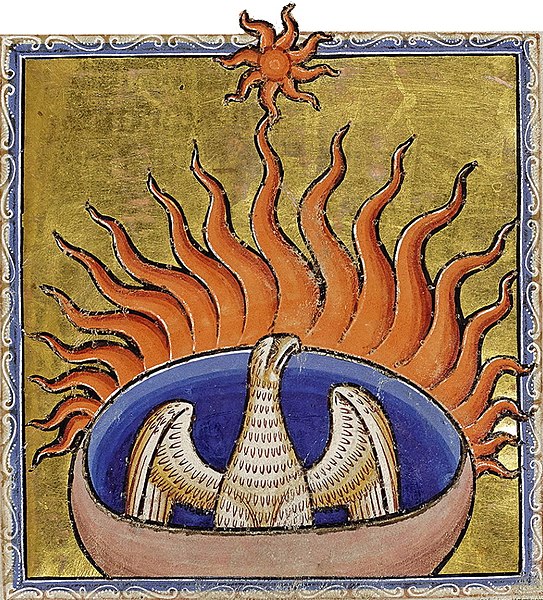
Phoenix. The Aberdeen Bestiary. 13th Century. Aberdeen University Library. Aberdeen, Scotland.
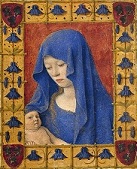
MODERN DEVELOPMENTS IN MARIOLOGY The book of hoursis a Christian devotional of writings, psalms and prayers, popular in the Middle Ages and intended for the laity. The books were usually in Latin though vernacular forms were not uncommon. The practice of reciting the hours was meant to provide the individual with a more immediate relationship with God and the Virgin Mary. The standard components included a calendar of church feasts, the Hours of the Virgin, the Hours of the Cross, the Hours of the Holy Spirit, the Office for the Dead, and the Suffrages.
The little office of the blessed Virgin Mary was and is a weekly devotional cycle consisting of psalms, hymns and sacred readings. It began in the eighth century as a monastic spiritual practice. By the tenth century it was in widespread use as a standard text in the book of hours. By the fourteenth century it was obligatory practice for all clergy.
This ritual remained common practice until mid-twentieth century when Pope Paul VI recommended that practitioners use the Divine Office in lieu of The little office of the blessed Virgin Mary. This decision by the Pope was consistent with other changes in the church calendar during the Second Vatican Council. Seen in the overall context of Pope Paul's many teachings on Mariology, the shift away from the Little office of the blessed Virgin Mary was an attempt to consolidate ritual practice rather than devalue the integral status of Mary within the Roman Catholic Church.
After the conclusion of the Second Vatican Council, the Little Office endured in print and practice as an alternative to The Divine Hours. This option accommodated those who simply preferred the Little Office over the Hours and also those who choose to center their daily spiritual practice around the Virgin Mary.
Marian devotion also found expression outside the liturgical hours. During the twentieth century, for the first time, the Roman Catholic Church recognized two Marian years. The first was in 1954 and celebrated the 100th anniversary of the of the proclamation of the dogma of the immaculate conception.
In 1987 Pope John Paul proclaimed the second Marian year, with the express purpose of embracing spiritual practices which the Second Vatican Council had found "primitive". The Pope had a particular affinity for the Virgin, invoking her intercession in prayer and making journeys to Marian sites. With the institution of the second Marian year, the Pope encouraged a return to the "warmth and simplicity" in spiritual practice lost after the Second Vatican Council. He placed an emphasis on liturgical tradition and celebration through the restoration of public processions along with pilgrimages to sacred sites dedicated to Mary.
The Virgin Mary remains an enduring part of spiritual practice in the twenty first century. Her shrine at Lourdes draws 5,000,000 pilgrims yearly. Each December millions more journey to the Basilica at Tepeyac Mexico for the feast day of Our Lady of Guadalupe. Mary is also the patron saint of numerous countries, serving as both intercessor and protectoress of her devotees.
The little office
of the blessed Virgin MaryMatins
AnnunciationLauds
VisitationPrime
NativityTerce
Annunciation to the shepherdsSext
Adoration of the MagiNone
Presentation in the templeVespers
Flight into EgyptCompline
Coronation of Mary